
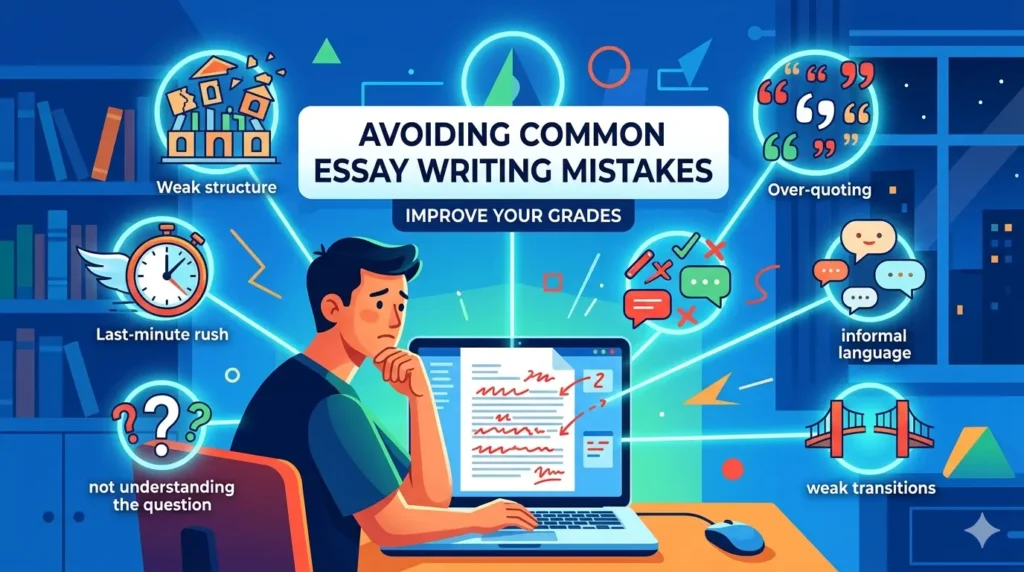
Essay writing feels simple at the start. You open your laptop. Stare at the screen. Think you got this. Then an hour passes. Still nothing solid. Or worse, you write everything fast and feel proud. Later, the marks come back.
This happens to many students. Not because they are bad writers. Mostly because they repeat the same mistakes again and again. Small ones that are easy to miss and easy to ignore. But they hurt your essay quietly.
This article talks about the most common essay writing mistakes. The kind students keep making without realizing. And how to avoid them before they mess up your grades again.
If you want a full step-by-step breakdown later, The Complete Guide to Essay Writing Services in the UK covers the whole process in detail. But here, we focus on what usually goes wrong.
1. Not Understanding the Question Properly
This mistake sits at the top. Students rush. They skim the question. They see one keyword and start writing. The problem is, essay questions are very specific. Every word matters. Analyze is not discuss. Compare is not explained. Evaluate is not describe. Missing this changes everything.
Common issues here:
- Writing too generally
- Answering half the question
- Ignoring key instructions
Before you write anything, slow down. Read the question twice. Break it into parts. If you don’t understand the question, the essay is already in trouble.
2. Weak or Missing Thesis Statement
A lot of essays feel empty. They talk, but say nothing clear. That’s usually because the thesis is weak or missing. Your thesis is the main point. The position you are taking. Many students write something very safe. Very vague. Something that doesn’t offend anyone. And also doesn’t impress anyone.
Bad examples look like:
- This essay will discuss different aspects
- There are many opinions on this topic
These sentences don’t guide the reader. They just fill space. A good thesis is clear and focused. It tells the reader what you believe and what the essay will prove. Learning how to improve academic writing skills helps a lot with this part.
3. Poor Essay Structure
Structure matters more than people think. Without it, even good ideas feel messy. Some essays jump from one point to another. No flow. No order. Paragraphs are either too long or too short. Sometimes both.
A basic structure works for a reason:
- Introduction
- Body paragraphs
- Conclusion
Each paragraph should talk about one idea only. If a paragraph starts talking about five things, it usually ends up saying nothing properly.
4. Overloaded Introductions
Many students try to impress early. Too much background. Too many definitions. Too many facts. The introduction is not the whole essay. It just opens the door.
A strong introduction:
- Introduces the topic
- Shows why it matters
- Presents the thesis
That’s enough. If your introduction feels heavy and long, the reader gets tired before reaching the main argument.
5. Weak Body Paragraphs
Body paragraphs do the real work. And they often fail.
Common problems include:
- No clear topic sentence
- Evidence without explanation
- Ideas that don’t link back to the thesis
Every body paragraph should follow a simple pattern:
- Main idea
- Evidence
- Explanation
- Link back to the question
Skip one part, and the paragraph feels incomplete. It looks finished on the surface, but something feels off, like the point never fully landed. This is one reason many students turn to an essay writing guide UK when their paragraphs just don’t come together properly.
6. Using Evidence the Wrong Way
Evidence is important. But many students don’t use it well. Some don’t use enough. They make big claims with no support. Others use too much. Paragraphs become a wall of quotes. Both are problems.
Good evidence use means balance:
- Use sources that actually relate
- Don’t over-quote
- Explain why the evidence matters
Your analysis matters more than the quote itself. The examiner wants to see your thinking, not just your references.
7. Over-Quoting Sources
This one deserves its own section. Some essays look like a collection of other people’s words. Quote after quote. Little original writing in between. This weakens your essay. It shows dependency. And sometimes, confusion.
Try this instead:
- Paraphrase most of the time
- Use short quotes only when wording is important
- Always explain the quote after
If the paragraph can survive without the quote, that’s usually better. It keeps your voice clear and stops the essay from sounding borrowed.
8. Informal Language and Tone
Essays are formal, not stiff. Students often forget this. Casual phrases sneak in. Contractions appear. Sometimes slang, too.
Common mistakes:
- Using “I think” or “you can see.”
- Writing as you talk
- Using short chat-style expressions
Academic writing should be clear and neutral, not boring. If tone is a struggle, learning academic writing skills helps with word choice and sentence flow.
9. Grammar and Punctuation Errors
Grammar mistakes don’t always fail an essay. But they slowly damage it. Run-on sentences, missing commas, and wrong tense, these things add up.
Common issues include:
- Very long sentences with no breaks
- Sentence fragments
- Inconsistent verb tense
Proofreading helps more than people admit. Reading your essay out loud feels awkward, but it works.
10. Weak Transitions Between Paragraphs
Some essays feel like bullet points in paragraph form. Each idea stands alone. No connection. This makes reading tiring.
Transitions don’t need fancy words. Simple links work fine:
- Referring back to the previous idea
- Showing contrast or continuation
- Keeping the argument moving forward
Flow makes your essay feel intentional, not random. It helps the reader move forward without stopping to refigure your point.
11. Weak Conclusions
The conclusion is often rushed. Students are tired by then. Word count is met. The deadline is approaching. So they repeat the introduction. Or end suddenly.
A conclusion should:
- Restate the thesis differently
- Summarize key ideas
- Leave a final thought
No new arguments. No new evidence. Just closure. A calm ending that shows you knew where the essay was going all along.
12. Ignoring Formatting Rules
This mistake hurts because it’s easy to avoid. Wrong font, wrong spacing, and incorrect referencing. These things cost marks.
Always check:
- Required citation style
- Line spacing and margins
- Reference list format
Presentation matters. Even when the content is strong. Small details shape first impressions and quietly influence how your work is judged.
13. Leaving Everything Until the Last Minute
This mistake causes all the others.
Rushing leads to:
- Poor understanding of the question
- Weak structure
- No editing
Good essays need time. Even basic planning helps. When time is tight or the workload is heavy, students sometimes look for support. Services like write my essay can help manage deadlines without panic, especially when multiple assignments collide.
Final Thoughts
Essay writing is not about sounding perfect. It’s about being clear. Staying on track. Paying attention to small things. That’s where most people slip.
A lot of mistakes come from rushing. Or guessing what the question means. Slow down a bit. Plan before writing. Read your work once again, even if you feel tired.
Good writing improves over time. It doesn’t show up suddenly. It builds slowly with practice and patience. And with fewer mistakes each time you sit down to write.