
Writing an essay seems easy at first. You open a document. You know the topic. But then nothing moves. The cursor blinks. Time passes. You start doubting every sentence. This happens a lot. And most of the time, the real issue is not ideas. Its structure.
Structure gives your writing some balance. It keeps your thoughts from spilling everywhere. Without it, even good ideas feel weak. With it, average ideas can still look solid. This guide breaks down essay structure in a simple way. No heavy theory. Just practical stuff you actually use when writing at night, tired, and slightly annoyed.
What Is Essay Structure?
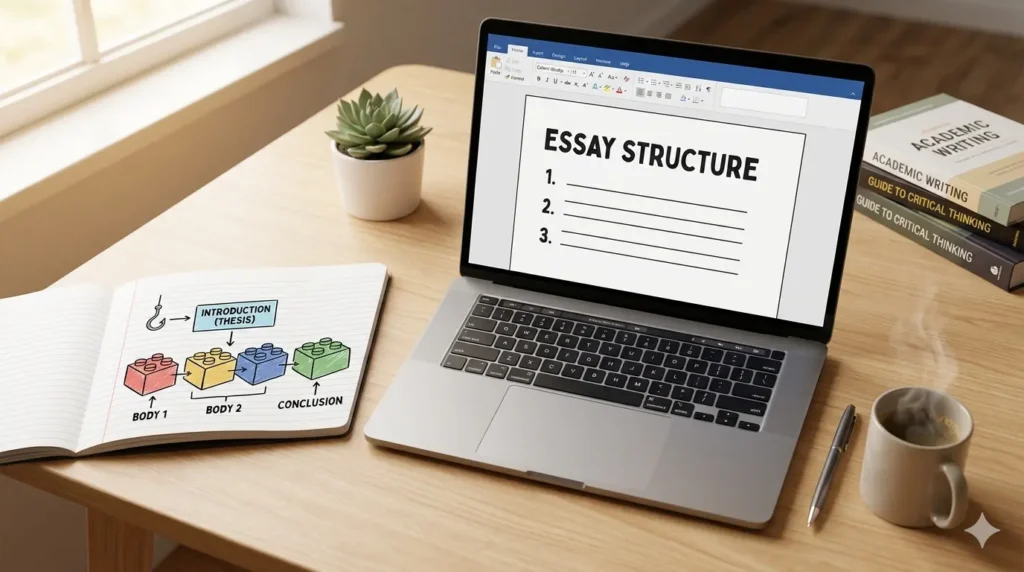
Essay structure is the basic shape of an essay. It shows where ideas go. What comes first. What follows. And how it all ends.
Most essays follow the same pattern:
- Introduction
- Body paragraphs
- Conclusion
This format works almost everywhere. It’s not creative or exciting. But it works.
When structure is missing, essays feel scattered. You jump from one point to another. The reader feels lost. And once that happens, the essay stops making sense, even if the content is good.
Why Essay Structure Matters
Structure keeps things calm. It gives you a path to walk on when your brain feels done. You don’t need to guess what comes next. It’s already there. That alone saves energy.
Good structure helps you:
- Stay focused on the question
- Present ideas clearly
- Avoid repeating the same point
- Save time while writing
Many students think writing is the hard part. Often it’s not. Its structure. That’s why some people turn to a professional essay writing service when deadlines pile up and stress hits hard. Clear structure doesn’t make writing easy. But it is helpful.
The Introduction: Setting the Direction
The introduction starts the essay. It doesn’t need to impress anyone. It just needs to guide. A good introduction tells the reader what the essay is about and where it’s going. Nothing more. Nothing extra.
Key Parts of an Introduction
Most introductions include:
- A hook. Simple and relevant
- Some background. Just enough
- A thesis statement
The introduction should not explain everything. That’s not its job. Keep it short. Around 10 to 15 percent of the essay is enough.
Introductions feel hard because they come first. You’re not warmed up yet. That’s normal. They don’t need to be perfect. You can fix them later.
If you get stuck, looking at examples of a How to Write a Strong Thesis Statement helps. It shows where the introduction should lead. And that clears some of the confusion.
Thesis Statement: The Core of the Essay
The thesis is the center of everything. If it’s weak, the whole essay feels shaky.
A thesis tells the reader two things:
- What the essay is about
- What your main argument or position is
A good thesis is clear and focused. It’s not too broad. It’s not a simple fact. It’s something you can support and explain. Weak thesis statements sound vague. They try to say everything and end up saying nothing.
This is where many students struggle. And this is why some look for expert essay help. Fixing the thesis often fixes half the essay without touching anything else.
Body Paragraphs: Building the Argument
This is the main part. The longest one. And the most tiring. Each body paragraph should focus on one idea only. That supports your thesis. When you try to put everything in one paragraph, it falls apart fast.
Basic Body Paragraph Structure
A strong paragraph usually has:
- A topic sentence
- Explanation
- Evidence like facts or examples
- Analysis explaining why it matters
- A small link to the next paragraph
You don’t need to label these parts. Just make sure they exist. When paragraphs follow this structure, the essay feels steady. The reader understands your thinking. And marking becomes smoother.
Paragraph Unity and Flow
Unity means one idea per paragraph. No mixing. No jumping around. Just one clear focus. Flow is how paragraphs connect to each other. Essays should feel like a chain, not separate blocks.
To improve flow:
- Use simple transition words
- Refer back to your thesis
- Keep ideas in logical order
You don’t need fancy transitions. Small links are enough. The goal is to guide the reader, not impress them.
Using Evidence Correctly
Evidence gives your writing support. Without it, your essay sounds like an opinion only.
Evidence can be:
- Academic sources
- Statistics
- Real examples
- Expert opinions
But adding evidence is not enough. You must explain it. Say why it matters. Say how it supports your point. Many students drop a quote and move on. That weakens the paragraph. Explanation is what turns evidence into an argument.
Common Body Paragraph Mistakes
These mistakes show up a lot. Almost everywhere.
- Paragraphs that are too long and go nowhere.
- Very short paragraphs without explanation.
- Repeating the same idea by just rewriting.
- Weak topic sentences. Or none at all.
Planning helps avoid this mess. Even a rough outline saves time.
The Conclusion: Ending with Purpose
The conclusion ends the essay. It should feel calm. Not rushed or dramatic. It doesn’t introduce new ideas. It just closes the discussion.
What to Include in a Conclusion
Most conclusions include:
- A restated thesis
- A summary of the main points
- A final thought
Don’t copy sentences from earlier sections. Say the same ideas differently. Keep it clear. Keep it short. A good conclusion makes the essay feel complete.
Essay Structure for Different Essay Types
The basic structure stays the same. But small adjustments help, depending on the essay type.
Argumentative Essays
- Clear position
- Balanced discussion
- Strong evidence
Descriptive Essays
- Logical order
- Clear progression
- Detailed explanation
Analytical Essays
- Focus on interpretation
- Evidence-based reasoning
- Constant link to the thesis
Knowing the essay type helps you adjust the structure without overthinking.
Planning Before Writing
Good essays usually start with planning. Not writing. Even five minutes helps.
Useful planning steps:
- Read the question carefully
- Break it into parts
- List main ideas
- Gather evidence
Skipping planning often causes stress later. Deadlines feel closer. Pressure builds. That’s when students start checking The Complete Guide to Essay Writing Services in the UK options to cope with heavy workloads. Planning reduces that pressure before it starts.
Editing Structure After Writing
After finishing, step away. Take a break. Then come back and check the structure.
Ask yourself:
- Does every paragraph support the thesis?
- Is the order logical?
- Are ideas repeated too much?
- Do paragraphs connect well?
Fixing structure improves an essay more than fixing grammar ever will.
Final Thoughts
Essay structure is not complicated. It just needs attention. When the structure is clear, writing feels lighter. Ideas stop fighting each other. Everything sits where it should. You don’t need perfect language. You need clear thinking. One idea per paragraph.
Writing will still take effort. It always does. But with a solid structure, it stops feeling chaotic. And that makes the whole process easier to handle.