
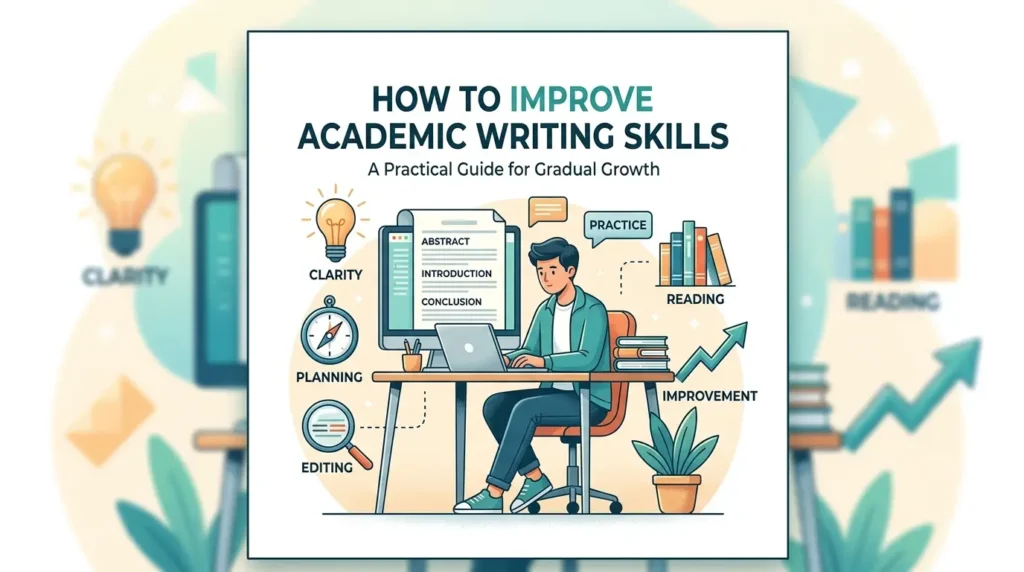
Academic writing feels slow. Not dramatic, just draining. You sit down with good intentions, and somehow the sentences don’t land right. They sound too simple, or messy, or just stiff in a weird way. This happens to many students, even the good ones. Writing like this doesn’t come easy. It is something you pick up over time.
The issue is that proper guidance is rare. Most people are expected to already know the rules. So they guess. They copy structures. They fix things late at night and hope for the best. That is how it usually goes.
This piece is not chasing perfection. It focuses on getting better, little by little. Building practical habits and real improvement.
First, Understand What Academic Writing Wants
Academic writing does not care about your personality much. It cares about clarity. Structure. Proof. That is it.
You are answering a question. Not telling a story. Not sharing feelings. Even when opinions are allowed, they must be supported. Everything needs a reason.
Always remember to ask yourself before you begin writing:
- What is the question asking?
- Who is the audience?
- What kind of paper do you need (essay, report, research paper)
Many students think academic writing means using big words. That usually backfires. Long words and long sentences make things worse. Clear writing wins almost every time.
Build a Strong Foundation Through Reading
This part gets ignored a lot. Reading helps writing. Simple as that. When you read good academic work, your brain starts copying patterns. How paragraphs start. How ideas flow. How sources are added without breaking the sentence.
You do not need to read entire books. Even a few journal articles or samples from essays writing service help. Pay attention to how arguments are built. Not what the topic is. How it moves. Bad writing often comes from not seeing enough good writing.
Plan Before You Write
Writing without a plan feels productive at first. Then it collapses. You reach the middle and forget your point. Paragraphs overlap. Ideas repeat. Fixing it later takes more time than planning did.
A simple outline is enough:
- What is the main argument
- What points support it
- What order makes sense
When you know where you are going, writing feels lighter. Still tiring. But manageable.
Focus on Paragraph Structure
This is where many essays fall apart. A paragraph should do one thing. If it tries to explain three ideas, it becomes messy.
A basic paragraph looks like this:
- One clear idea at the start
- Evidence or example
- Short explanation
- Link back to the main topic
If a paragraph feels too long, it probably is. Breaking it in half usually solves the problem. The shorter paragraphs are also easier to read in your work.
Improve Clarity and Precision
Simple writing is not weak. It actually works better most of the time. When sentences get too long, the point gets lost. That happens a lot in academic work.
For example:
- Instead of “It can be clearly seen that…”
- Write “This shows that…”
You do not need fancy words. You need the right ones. Clear words. Words that say what you mean without extra weight. If a sentence feels stretched, cut it. If an idea repeats, remove it. Most essays get better when you trim them down a bit.
You should read your work aloud. It feels weird, but it works. When a line sounds off when you say it, it probably reads off, too. Editing is tiring. Still, it fixes things.
Referencing Is Annoying but Necessary
Referencing is frustrating. Almost everyone dislikes it. But skipping it properly causes problems fast. Marks drop, even when the content is good.
At first, citation styles seem unnecessary. Still, they exist and are important. To prevent minor but costly errors, it is better to learn the essentials of APA vs MLA vs Harvard Referencing.
Once you understand one style, the rest feel less heavy. Leaving referencing for the last minute only adds stress. It always does.
Editing Is Where Writing Gets Better
The first draft is usually bad. That is normal. Good writing comes from rewriting. Cutting. Fixing. Rearranging.
Edit in rounds:
- First, ideas and structure
- Then, sentence clarity
- Then, grammar and formatting
Attempting to rectify things at once is exhausting. Break it down. Even minor changes enhance quality beyond the imagination of people.
Practice Writing Regularly
Practice small things, write summaries, rewrite paragraphs, and fix old essays. These exercises are more than you imagine. Writing often eases the process of writing. Avoiding it does the opposite. You do not need motivation. You need routine.
Feedback Is Useful, Even When It Stings
Feedback rarely feels good. But it shows patterns. If multiple instructors point out the same issue, that issue matters. Weak introductions. Poor structure. Unclear arguments. These things repeat for a reason.
Do not just read comments and move on. Apply them to the next assignment. That is how progress happens.
Knowing When to Get Help
Sometimes, effort is not enough. Time is short. Deadlines pile up. Some students learn by reviewing work done by professional academic writers. Not to copy, but to understand structure and flow. Seeing a strong example makes things clearer.
Others look at examples of academic papers to see how arguments are organized and referenced. Used carefully, this can be educational. The goal should always be learning, not shortcuts. Support tools exist because academic writing is difficult.
Learn From Reliable Guides
The internet is full of writing advice. A lot of it sounds confident, but it does not really help. Some guides stay too vague. Some are outdated. Others make simple things feel complicated.
Resources like The Complete Guide to Essay Writing Services in the UK work better because they explain expectations and common mistakes in plain language. Clearly structured guidance on the matter of what you expect in universities can help you understand what is expected. Proper advice is a time-saving measure and prevents guessing.
Build a Small Academic Vocabulary
You do not need hundreds of fancy words. You need the right ones, used in the right place. Academic writing relies on certain phrases that show argument and direction. Transitions. Signal words. Reporting verbs. You see them again and again.
Notice phrases like:
- This suggests that
- The findings indicate
- Previous research shows
Using these naturally improves tone without forcing it or sounding stiff.
Time Management Matters More Than Talent
Rushed writing always looks rushed. The structure slips. References get messy. Even strong writers struggle when time runs out.
Leaving work for the last day creates pressure that hurts quality. Breaking the task into parts helps:
- Research
- Outline
- Draft
- Edit
Doing the work over some days makes it easier and the result better. It works better than rushing.
Final Thoughts
Academic writing is not about sounding smart. It is about being clear and direct, with proper support. Improvement takes time. Bad drafts are part of it. Everyone writes them. The goal is simple: write a little better each time.
Read more. Plan more. Edit more. Be patient with yourself. Academic writing is a skill, not a talent. And skills can be trained, even on tired days.