
Writing an essay seems easy. But when you actually sit down to do it, it feels messy. You open the document. Look at it. Nothing comes. It happens more than people admit. This is normal.
For UK students, essays are not just about writing anything. There are rules. Structure matters. Arguments matter. Even small things like references can affect marks. So, it can feel a bit heavy sometimes.
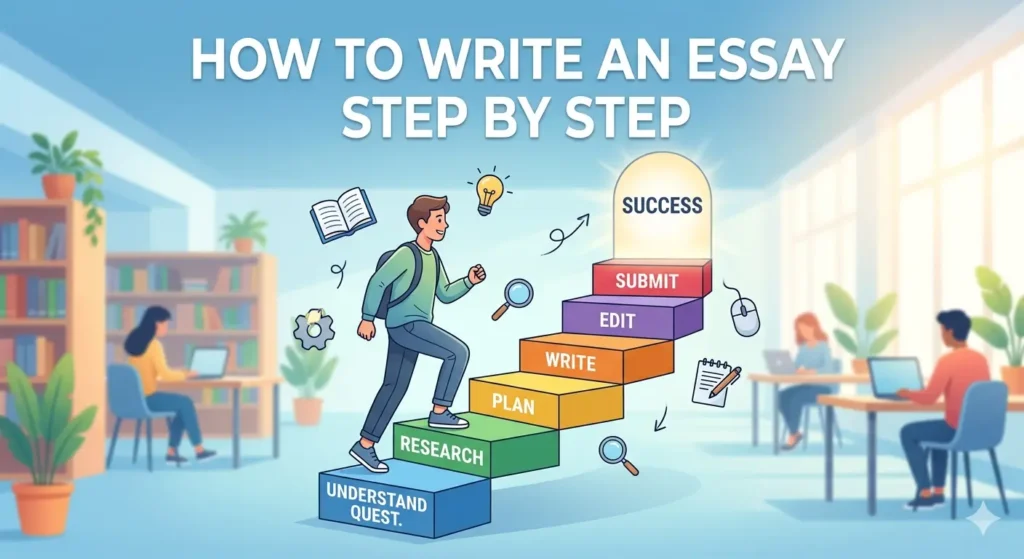
This guide will walk you through each step. Simple way. No complicated terms. Just what you actually need.
Step 1: Understand the Essay Question
First thing. Read the essay question. Not once, read it two or three times. Most students rush this part. Then later, they realize they answered something else. That’s where problems start.
Look for keywords:
- Discuss
- Explain
- Evaluate
- Compare
These words change everything. “Discuss” is not the same as “explain”. “Evaluate” means you need to give judgment, not just information. Break the question into parts. Try to understand each part. Then put it together again. Sometimes, checking the Complete Guide to Essay Writing Services in the UK helps you understand how these questions are usually handled.
Step 2: Be Clear About the Topic
Some questions look simple. But they are not. There is always something hidden in it. A small focus that you can miss if you rush.
Ask yourself:
- What is the main idea
- What exactly do they want me to do
- Do I need to argue or just describe
If you skip this step, the essay feels off later. You might write well, but still miss the point. Take a few minutes here. It saves time later.
Step 3: Do Some Research
Now you start looking for information. Don’t try to read everything. That will just confuse you more.
Use:
- Textbooks
- Journal articles
- Trusted academic websites
Avoid random blogs or forums. They are not always reliable. While reading, don’t copy big paragraphs. Just write short notes, small points that are easy to read later.
Sometimes research feels too much. Too many sources. Too many ideas. In that case, some students prefer to get expert essay help to better understand the topic and move forward.
Step 4: Organize Your Notes
After research, your notes might look messy. That’s fine. Now, try to organize them. Group similar ideas together. Remove anything that is not useful. Keep only what supports your essay.
This part is not very exciting. But it makes writing easier later. You start seeing a pattern. Your argument becomes clearer.
Step 5: Make a Rough Plan
Planning is simple. Don’t overthink it.
Just write:
- Your main argument
- 3 or 4 supporting points
- A few examples for each
It doesn’t need to look perfect. Just clear enough.
A basic plan:
- Introduction idea
- Body point 1
- Body point 2
- Body point 3
- Conclusion idea
Without a plan, writing feels messy. You keep changing direction. Waste time fixing things again and again.
Step 6: Understand the Structure
Structure matters a lot in UK essays. Even if your ideas are strong, a bad structure can lower marks.
Basic format:
- introduction
- main body
- conclusion
Each part has a job. If you feel confused, you can check an essay structure explained guide. It helps you see how everything fits together.
Step 7: Write the Introduction
The introduction feels hard. Many students struggle here. But it doesn’t have to be perfect. Just keep it simple.
Your introduction should:
- Introduce the topic
- Give a little background
- Show your main argument
Don’t add too much detail here. Save it for the body. Also, don’t try to sound too fancy. Clear writing works better.
Step 8: Work on the Main Body
This is the biggest part of your essay. Most of your marks come from here. Each paragraph should focus on one idea.
Simple structure:
- First line: main point
- Next: explain it
- Then: give evidence
- Last: small conclusion
Try to keep paragraphs connected. Use simple linking words. Also, always support your ideas. Don’t just say something is true. Explain why. Sometimes students repeat the same idea in different words. Try to avoid that. Add something new in each paragraph.
Step 9: Keep Language Simple
A common mistake is trying to sound too academic, like long sentences and difficult words. It gets confusing.
Simple writing is better.
Use:
- Short sentences
- Clear words
- Direct explanation
Avoid:
- Slang
- Text language
- Unnecessary complex words
Your goal is to be understood. Not to impress with vocabulary.
Step 10: Add References Correctly
Referencing is important. It shows your work is based on real sources. In UK universities, missing references can cost marks.
Common styles:
- Harvard
- APA
- MLA
Always follow the required style. Whenever you use someone’s idea, mention it. Even if you rewrite it in your own words. It may feel repetitive, but it’s necessary.
Step 11: Write the Conclusion
The conclusion is short. Many students rush it at the end. You feel tired by this point. You just want to finish and submit. But this part still matters.
You just need to do:
- Summarise your main points
- Restate your main argument
- End the essay in a clear way
Don’t add new ideas here. It confuses the reader. Keep your conclusion simple. Try to remind the reader what you talked about.
Step 12: Take a Short Break
After writing, take a small break. Even 15 minutes helps. More if you have time. Your mind gets tired while writing. You stop noticing mistakes. Everything starts looking fine, even when it’s not.
A short break resets your focus. Your mind is slightly fresh when you return. You begin to notice things you previously missed. This step is small, but useful.
Step 13: Edit and Proofread
Now comes the part most students ignore or rush. Editing takes time. But it improves your work a lot. Start checking your essay slowly.
Look for:
- Grammar mistakes
- Spelling errors
- Unclear or broken sentences
- Missing or repeated words
Read slowly or read it out loud. You will catch small issues and fix them. Even small edits improve your essay a lot
Common Mistakes to Watch
Some mistakes keep coming back. Many students make them again and again.
- Not understanding the question properly
- Weak or messy structure
- No clear argument
- Missing or wrong references
- Skipping proofreading at the end
These things lower your marks. Even if your idea is good. Try to be aware of these things while writing. It helps you avoid problems later.
When You Feel Stuck
Sometimes nothing works. You read, you try, but you still feel stuck. In such situations, many students often look for essay writing services in the UK. Not always for full essays. Sometimes, just for guidance or understanding the topic better. It gives you a way forward when you feel utterly lost.
Final Thoughts
Essay writing takes time to get used to. At the start, it feels slow. A bit frustrating too. You make mistakes. You fix them. Then you learn something. It doesn’t become perfect. But it becomes easier.
Just follow the steps properly. Don’t try to do everything at once. You begin to write more quickly with practice. And slowly, it stops feeling like a struggle every time.